Every high-temperature kiln, metal grinder, or grain dryer sends swirls of dust into the air. Left unchecked, that dust erodes bearings, blocks heat exchangers, and leaks into the atmosphere. One workhorse device tackles the problem with nothing more than geometry and Newton’s laws: the Cyclone Particle Separator. By forcing dirty gas to spin at high speed, the separator flings heavy particles outward while letting cleaner air escape through the center. No filters, no moving parts – just a clever use of centrifugal force.
The Physics Behind Cyclone Particle Separation
• Centrifugal Force in Action
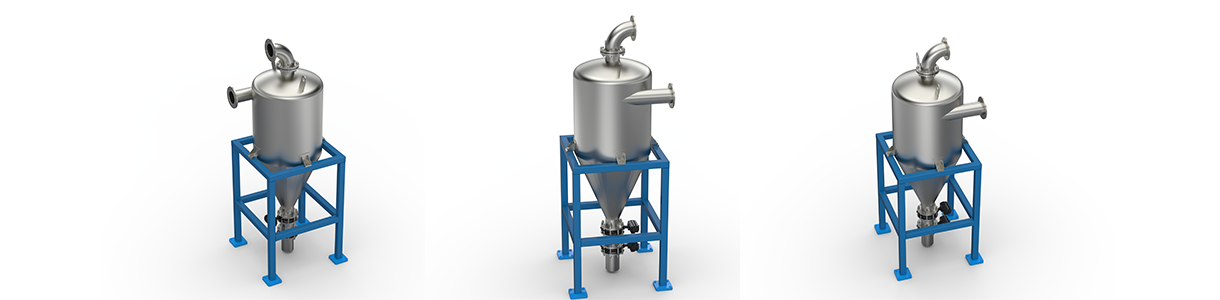
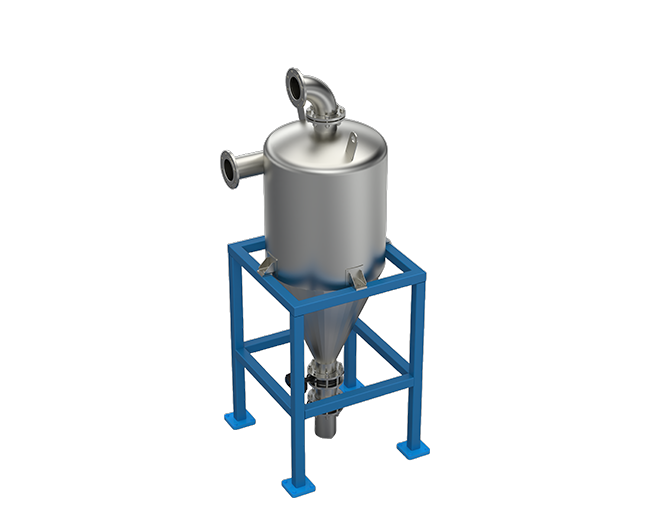
Imagine water spiraling down a bathtub drain. The faster it turns, the more the water presses against the tub wall. A Cyclone Particle Separator copies that motion. Gas laden with dust enters tangentially, swirls into a tight vortex, and accelerates. Particles – being heavier than air – feel a stronger outward push. They strike the metal wall, lose velocity, and slide downward into a hopper. Meanwhile the cleaned gas reverses direction along an inner core and exits at the top.
That entire journey happens in milliseconds and relies on only three geometric variables:
• Inlet width: A narrow inlet boosts velocity but raises pressure drop.
• Outlet tube size: Too wide, and dusty gas escapes; too narrow, and back-pressure climbs.
• The Path of Dust and Clean Air (Extended)
✅ Dust follows a spiral that tightens as velocity rises
✅ Particles collide with the wall, then fall under gravity
✅ Clean gas forms an inner helix moving upward
✅ Pressure drop remains modest – often under 1 kPa
As the dusty air enters the Cyclone Particle Separator, it travels in a fast, swirling motion along the inside of the cylindrical chamber. The design forces the air into a downward spiral that gradually narrows, increasing the rotational speed. Heavier particles, due to inertia, are unable to follow the sharp curve of the inner vortex and are instead flung outward toward the chamber wall. There, they lose energy, slide down the wall, and drop into a collection bin below under the pull of gravity.
Meanwhile, the now-clean air forms a secondary inner spiral that moves upward through the vortex finder and exits through the top outlet. This dual-spiral airflow ensures efficient separation without turbulence or flow reversal. Because there are no internal filters, meshes, or moving components to block the flow, the system is highly resistant to clogging – even when dealing with sticky or high-volume dust streams. This makes the Cyclone Particle Separator especially effective as a primary pre-treatment step before baghouses, cartridge filters, or wet scrubbers, extending their life and reducing maintenance frequency.
Real-World Impact on Air Quality and Equipment
• Dust Control in Heavy Industry
Cement plants typically grind clinker at 1450 °C. The resulting dust is abrasive enough to scour fan blades within weeks. After a Cyclone Particle Separator was installed at a plant in Sichuan, stack opacity tests showed reduction in particulate emissions. Maintenance logs recorded an increase in ID-fan bearing life because fewer particles reached the fan housing.
Woodworking facilities face a different threat: fine sawdust that can ignite. A furniture factory in northern Italy fitted a bank of small cyclones ahead of its baghouse. The upgrade cut the dust loading entering the bags by half, extending bag life and lowering the fire-risk category for the whole shop.
• Energy Savings Through Lower Pressure Drop
Traditional fabric filters remove tiny particles but create high resistance. Every extra kilopascal forces fans to consume more power. A Cyclone Particle Separator removes the bulkier fraction first, so secondary filters see less mass and can run at slower speeds. Over a year, that translates into thousands of kilowatt-hours saved.
Chengzhu‘s Approach to Building Better Cyclone Particle Separators
• Tailored Engineering, Built to Last
Located in Hebei’s industrial corridor, Chengzhu operates a dedicated R&D center and two postgraduate workstations in partnership with Hebei University of Science and Technology. Engineers there test dozens of cone angles, inlet profiles, and wear-resistant linings in a full-scale flow loop. More than eighty patents have emerged from the program, including a modular vortex finder that can be swapped on-site to match changing dust loads.
Key design options offered:
✅ Material choices: Mild steel for general service, ceramic-lined steel for quartz dust, stainless for acidic gas
✅ Configurable inlets: Left-hand or right-hand entry, rectangular or scroll patterns
✅ Scalable diameters: From compact 200 mm units for lab dryers to 2.8 m giants handling 200 000 m³ /h
• Support That Keeps Systems Running
Supplying equipment is only half the story. Chengzhu technicians provide CFD-based performance simulations before shipment, field commissioning during installation, and periodic audits that track pressure drop, emission levels, and wear points. Replacement parts – vortex finders, dust hoppers, access gaskets – ship to most Asian locations.
Closing Thoughts
Industrial dust is more than a housekeeping issue; it threatens product quality, worker health, and profit margins. The Cyclone Particle Separator offers a straightforward, reliable way to strip out the heaviest fraction before it can cause trouble. When paired with fine filtration or scrubbing, a well-designed cyclone turns a cloud of abrasive particles into a manageable trickle of dry solids – a simple twist of physics that keeps modern factories humming.


 Blog · 4 月 01, 2026 Invitation Letter for the 2026 Vietnam (Ho Chi Minh) International Pastoral Exhibition Read More