Cyclonic Sand Separator technology is reshaping how plants manage particulate-laden air streams and protect downstream equipment. As a manufacturer, CHENGZHU builds systems for industrial waste gas treatment where reliability and simple upkeep matter. Below, we compare cyclone separation with legacy filter media approaches, highlight common pain points from the field, and introduce our core models.
What is Cyclonic Sand Separator
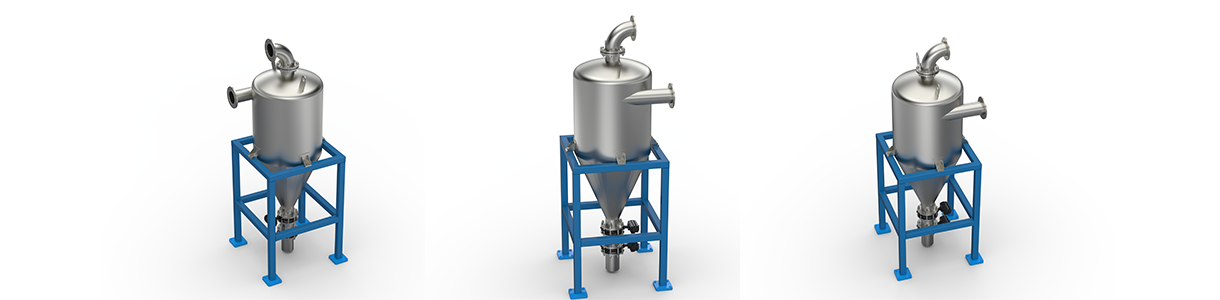
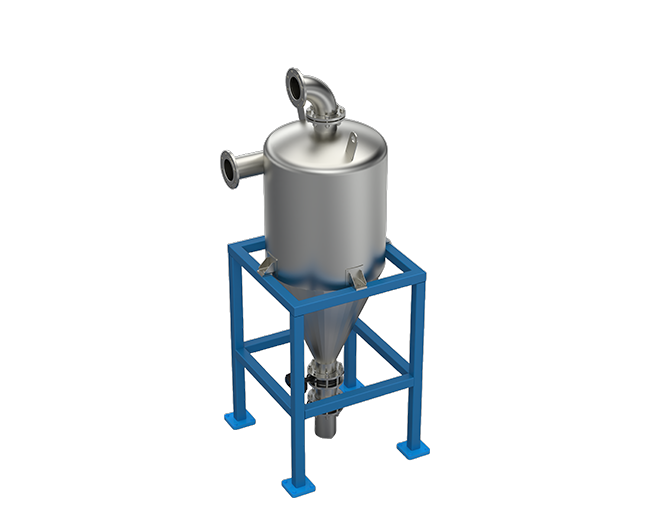
A Cyclonic Sand Separator (also known as air cyclone separator, cyclone particle separator, small cyclone separator, vertical cyclone separator, centrifugal cyclone separator, or cyclone air dust separator) tackles particles by using rotation and centrifugal force rather than a replaceable filter medium. Dusty airflow enters tangentially, spins inside the chamber, and particles migrate to the wall under centrifugal force. Gravity then guides them into the lower dust bin, while cleaner gas exits through the top outlet. This straightforward path helps purify waste gas and safeguard back-end equipment.
• How the cyclone mechanism works
In a cyclone, geometry matters. Component size ratios influence both collection efficiency and pressure loss. Three factors are especially important: the dust collector diameter, the air inlet size, and the exhaust pipe diameter. By tuning these proportions, CHENGZHU engineers balance capture performance with stable pressure conditions.
Why Many Reassess Traditional Filters
Traditional filtration methods (for example, systems that depend on filter media) often face predictable hurdles in dusty, high-load environments. Plants report recurring stoppages, rising operating costs, and gradual performance drift. In contrast, a Cyclonic Sand Separator offers a mechanical, media-free approach that can maintain predictable performance without frequent swaps.
��� Common pain points we hear from operators
• Consumable dependence: Media replacement introduces recurring cost and unexpected stockouts.
• Clogging under heavy load: Fine and coarse particles can blind filter surfaces and cause unplanned shutdowns.
• Pressure instability: Accumulation on media increases differential pressure and strains fans and ductwork.
• Carryover risks: When filters are overloaded or damaged, particles can pass through and erode downstream assets.
A cyclone addresses these pain points with a simple internal flow path. There is no filter bag or cartridge to change, and the separation happens inside the cone and cylinder via rotation and gravity. For facilities upgrading from legacy filters, the step-change is often the move from consumable management to geometry-driven separation.
• Where a Cyclonic Sand Separator fits best
When the goal is to reduce particle concentration in industrial waste gas and protect back-end equipment, cyclone separation is a compelling first stage. It captures heavier and mid-sized particulates efficiently and conditions the flow before any polishing step downstream. The result is a cleaner, more stable system that is easier to keep on-spec.
CHENGZHU Solutions and Models
At CHENGZHU, we design and build cyclone systems with durable materials and clear model choices. Our separators emphasize robust geometry, stable pressure behavior, and straightforward installation. Below are selected specifications to help with initial sizing discussions:
Model
Diameter
Thickness
Material
Shipping Dimensions (Adjustable)
Weight
CZJC-700
700 mm
3 mm
Stainless steel
860 × 860 × 2000
280 kg
CZJC-800
800 mm
3 mm
Stainless steel
990 × 990 × 1980
350 kg
CZJC-900
900 mm
3 mm
Stainless steel
1100 × 1100 × 3900
390 kg
These air cyclone separator models are engineered for industrial duty. The stainless-steel construction supports long service life, and the adjustable shipping dimensions facilitate on-site placement and alignment. Because cyclone performance depends on geometry, our team pays special attention to inlet configuration and exhaust pipe sizing during design reviews.
• What to expect during integration
Commissioning a Cyclonic Sand Separator is a practical process. After mounting and duct connection, the unit establishes a stable vortex upon startup. Dust collects along the wall and falls into the storage chamber. Routine checks focus on confirming airtight connections, maintaining the dust bin, and verifying that inlet and outlet paths remain clear. When paired with downstream polishing equipment, the cyclone acts as a reliable pre-cleaner that reduces load and helps keep overall pressure loss predictable.
Call to Action – Work with CHENGZHU
If you are comparing a Cyclonic Sand Separator vs. traditional filtration methods, let’s talk about your dust load, gas temperature, and duct geometry. Contact CHENGZHU to review drawings and operating targets so we can recommend the right cyclone diameter, inlet size, and exhaust pipe configuration for your line. Our engineering team will help you protect downstream equipment and keep your plant running smoothly.


 Blog · 4 月 17, 2026 Invitation Letter for the 2026 Brazil FENAGRA Feed & Food Agroindustry Exhibition Read More