On-site rendering means the processor owns and runs the rendering line inside its own facility, keeping control of the material from kill floor to finished meal. Centralized rendering means the material is hauled to a third-party renderer who processes it and captures the product value, and the choice comes down to four numbers: daily tonnage, one-way haul distance, category mix and the product specification you need to hit. Everything below works outward from those four numbers.
Key takeaways
Fixed cost per tonne falls steeply as tonnage rises, so a captive line running far below the size it was built for can cost more per tonne than any gate fee.
Haulage behaves as a multiplier because it applies to every tonne and every trip, including residue that has to travel back, which is why distance punishes centralized routing harder than a flat transport fee suggests.
A captive plant is a single train with no backup, and the buffer is hours of bin capacity rather than days, so a written emergency arrangement with a renderer belongs in the plan.
Category segregation and the three-stage scrubber train are capital items with ongoing operating cost, and both have to be priced before the tonnage model means anything.
A modular rendering unit is the middle path for mid-volume processors who want control of lag time and category routing without the footprint of a full stick-built line.
What On-Site vs Centralized Rendering Actually Means
Search this phrase and page one is entirely front-end tutorials about client-side and server-side page rendering. That tells you something worth knowing: the industrial meaning is unclaimed, so the articles ranking today cannot answer a question asked by someone standing next to a full raw material bin.
Rendering here means cooking, sterilising, separating and drying animal by-products into meal, fat and feedstock. No browsers involved.
Two options, one line each
On-site (captive) rendering means the processor owns and operates the line on its own site. Material leaves the kill floor and enters a cooker without ever getting on a truck, and the processor keeps the meal and the fat.
Centralized rendering means a third party processes the material at a dedicated plant. You either pay a gate fee or surrender the material outright, and the renderer keeps the product value.
Pin the outputs down first
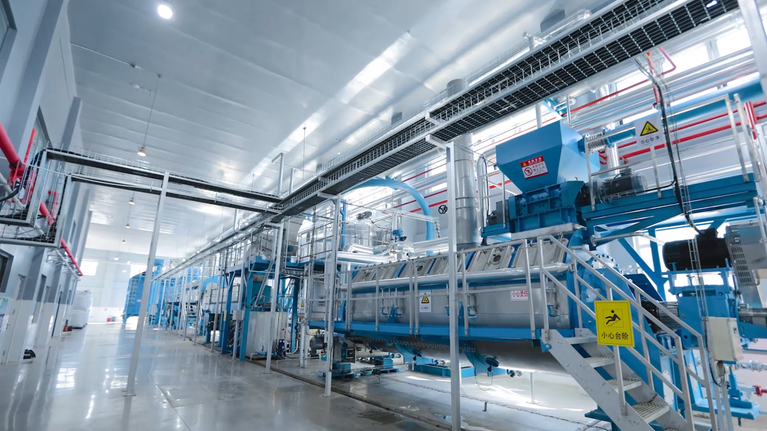
Both routes end in the same short list: meat and bone meal and animal fat for feed, feather meal, fishmeal, fertilizer raw material, and biodiesel crude oil from material that cannot enter the feed chain. chengzhurendering builds equipment for all of it, including lines that treat dead animals and convert them into fertilizer raw materials and biodiesel crude oil. If you want the process walkthrough before the decision model, start with what a rendering plant actually does.
The position of this article: this is a scale, distance and segregation question. Both routes use cookers, dryers and scrubbers built to the same physics, so there is no technology argument to win.
The Four Inputs That Decide It: Tonnage, Haul Distance, Category Mix and Specification
Four inputs settle this, and everything below works outward from them: daily tonnage, one-way haul distance, category mix and the product specification you need to hit. Get a rough number on all four before you look at a single quotation.
Tonnage sets the floor
Cooking, drying and odour abatement all have a minimum economic size. The cooker needs enough material to fill a cycle, the dryer needs to run long enough to be worth firing, and the scrubber train runs at full cost whether the line is at rate or at a fraction of it. Fixed cost per tonne falls steeply as throughput rises, and climbs just as steeply when a line runs far below the size it was built for.
Distance multiplies rather than adds
Haulage applies to every tonne, every trip and every return leg, including residue that has to come back or go on to another disposal route. It also ties up a truck and a crew that could be doing something else. That is why distance behaves as a multiplier on whatever the renderer charges, not as a flat transport fee you can quietly absorb.
The two curves cross
Fixed cost per tonne falls as tonnage rises. Haulage cost per tonne rises roughly linearly with distance. Plot both against your own figures and the crossover is your decision point, which beats any borrowed rule of thumb.
Band
What it looks like
Decision
Small volume, long haul
One shift of material every few days, distant renderer
Stay centralized and negotiate the gate fee hard
Mid volume, medium haul
Steady daily material, renderer within a few hours
Genuine contest: build the full cost model
High volume, tight segregation
Multiple loads per shift, categories already split
Captive line justified, modular as the first stage
A modular unit is the third path
Between a stick-built plant and pure outsourcing sits the modular or containerised mini unit. chengzhurendering’s slaughter waste range covers Modular Mini Rendering Units alongside Feather Pump, Feather Water Separation Sieve, Feather Squeezer, Crusher, Raw Material Bin, Cooker, Paddle Dryer, Coil Dryer and Hydrolyzer, so the same core process can be assembled at a size that matches mid-volume throughput. It suits processors who want control of lag time and category routing but cannot justify a full line.
Never size on the average
A plant that kills three days a week still has a peak the equipment has to survive. Size to the peak day, or hold buffer in the bin. This is where undersized lines fail first, and the receiving bin is the component that absorbs it: a mechanical spiral separation rotor separates, caches and releases material at a uniform, quantitative feed rate, so the cooker stays evenly fed even when intake arrives in bursts. The wider problem is covered in handling variable raw material loads in an animal rendering plant.
Side-by-Side: Pros, Cons and Who Actually Runs the Plant
The grid below is the quick read. The two paragraphs after it cover the rows buyers consistently underestimate: labour judgement and permit ownership.
Criterion
On-Site (Captive) Rendering
Centralized Rendering
Capital outlay
Full line, scrubber train, site works
None
Cost structure
Mostly fixed: energy, labour, wear parts
Mostly variable: gate fee plus haulage
Effect of distance
Irrelevant, conveyor length
Multiplies with every tonne and trip
Time from kill to cook
Minutes to hours
Truck route plus intake queue
Who owns meal and fat value
You
The renderer
Permit holder
You: air, wastewater, category records
The renderer
Category segregation
You design, clean and document it
Already built into their lines
Downtime exposure
Single train, no backup
Spare capacity across several lines
Staffing: automation cuts labour, not judgement
A rendering line needs operators who can read a drifting batch: a temperature that will not hold, a pressure that creeps, moisture that will not come down. PLC automated production systems cut the manual handling and make a small crew viable, which is exactly why mid-size processors can now consider a captive line at all. What automation does not do is remove the person who knows how that particular cooker behaves at 140°C and 0.5MPa and can stop the cycle when the numbers disagree with the recipe.
The asymmetry nobody prices
Centralized cost is visible and monthly: a gate fee, a haulage invoice, sometimes a handling charge for late delivery. On-site cost is partly invisible, because the meal and fat you now own never appear as revenue in the old budget. Compare capital cost against gate fee while ignoring the co-product value you stopped surrendering, and the model tilts toward outsourcing for the wrong reason.
What triggers extra work on each side
On-site, the extra work arrives as a line stoppage, a failed scrubber test or a batch that misses spec, and it lands on your maintenance and quality staff. Centralized, it arrives as a renderer changing which categories it will accept, a haulage price revision, or a schedule change that leaves material sitting on your dock over a weekend. Both are manageable. Only one of them is inside your control.
The Lag-Time Penalty: What Haul Distance Does to Meal, Fat and Biogas Value
The clock starts at the kill floor, not at the gate of the plant that eventually cooks the material.
Between those two points, fat oxidises, moisture shifts, microbial load climbs and protein quality falls. None of it appears as a line item, and all of it is paid for at the point of sale, because a feed mill buys protein and fat, not tonnage.
Which material suffers most
High-fat, high-moisture streams degrade fastest. Fish is the most time-sensitive of the common feeds, which is why fishmeal plants cluster at harbours rather than at inland markets. Soft offal and blood follow close behind. Bone tolerates a wait far better than fat does, which is why mixed loads hide the problem: the bone arrives fine and the fat in the same bin does not.
A conveyor versus a truck route
In a captive plant, lag time is the length of a conveyor plus the cycles of a bin. In a centralized plant, it is a truck route, a weighbridge and a queue at intake.
What a consistent cycle protects
Feed buyers purchase a specification: protein, fat, digestibility. A cooker that hydrolyses for about 30 minutes, reaches 140°C at 0.5MPa during the heating stage and then dries under vacuum to a fixed endpoint produces a repeatable meal. The same machine run to a wandering endpoint produces meal that looks correct on a certificate and disappoints in the mixer.
The chemistry explains the stakes. Feathers processed at 140°C break down keratin into digestible protein, which is why chengzhurendering’s hydrolyzers run to that temperature and why automated control of temperature and pressure matters more than throughput on paper. Under-processed feathers are filler. Over-processed feathers lose value. Something has to own that window, and it is easier to own inside your own building.
Co-products are revenue, not disposal. Separated fat and sludge can feed biodiesel production or anaerobic digestion, and equipment that treats dead animals and converts them into fertilizer raw materials and biodiesel crude oil exists precisely because those streams have buyers. On a captive site you keep that stream. On a centralized one, the renderer does.
Building the Total Cost of Ownership From Mechanism, Not Percentages
Most gate fee versus capital comparisons are decided before a single verified number is entered, because the two sides of the ledger are constructed differently. Build both from the same list.
Capital and installation: the line itself, foundations, steam and power connections, ducting, and the footprint the scrubber train takes up.
Energy: cooking, drying and running the scrubber train, which continues while the line is idle.
Labour: operators, plus maintenance and quality time that rarely appears in the first budget.
Maintenance and wear parts: crusher hammers, pump seals, conveyor flights, cooker door gaskets.
Water and scrubbing chemicals: a recurring line, not a one-off commissioning cost.
Testing and compliance: stack testing, wastewater sampling, record keeping and audit time.
On the centralized side: gate fee, haulage, handling charges, plus the co-product revenue you never receive.
Drying is the energy line that matters
After sterilisation the cooker drives off moisture under vacuum or in a dryer, and water content is what you pay to boil away. Every point of moisture entering the line is energy leaving your account, which is why a well-run receiving area that drains free water before cooking beats any efficiency tweak downstream. chengzhurendering’s drying systems are supplied as a one-stop package covering design, manufacturing, installation and after-sales service, which matters because drying performance is a system property rather than a machine property.
Scrubber chemistry is production cost
Your air permit depends on the washing towers running correctly, with the right liquid levels, flows and pressures. Treat reagent and water consumption as a production cost line beside energy, because the day it gets cut to save money is the day the fence line smells.
Two modelling errors that flip the answer
The first is comparing capital cost against gate fee while ignoring the meal and fat revenue you no longer own. The second is sizing the line to today’s tonnage with no headroom for the peak. Either one can make a bad decision look conservative.
The method for building this out line by line, including how to frame payback, is set out in how to calculate ROI on a rendering plant investment. The honest verdict: below a certain volume and beyond a certain distance, centralized wins on cash cost, and the on-site case then has to be argued on product value, traceability and uptime instead.
Category 1, 2 and 3 Material: Why Segregation Reshapes the Economics of a Small Unit
Animal by-product categories cannot be run interchangeably through one unsegregated line. That single fact turns separation, dedicated routing and documentation into design requirements rather than paperwork, and it is the reason a small captive plant can cost more than the tonnage model predicted.
Check your own jurisdiction before you size anything. The categories, the handling rules and the record-keeping obligations are set by law, they differ between countries, and they are revised. Take the current figure from the authority that issues your permit, not from an article.
What segregation actually costs on a small plant
Separate receiving points, separate storage, a documented clean-down between runs, and records that tie every finished batch back to its input. On a large site those are line items. On a small one they can be the difference between one cooker and two, because a plant that wants to process fallen stock alongside slaughter waste may find the combination forces a dedicated line and a separate route from the gate.
Why the centralized renderer does it cheaper
They already run dedicated lines, their staff do nothing but this, and the documentation is routine work rather than an added shift. That is a real advantage and it should be priced honestly. The counter-argument is traceability: you already know the origin of every carcass that enters your yard, so proving source is easier for you than reconstructing it from a docket three parties removed. Slaughter waste converted on site into meat and bone meal and animal fat keeps that chain short, and short chains are what feed buyers increasingly ask to see.
The sterilisation step is the compliance backbone
The heat and pressure stage is what kills harmful bacteria such as E. coli, and the logged temperature and pressure are the evidence that it happened. A Batch Cooker that reaches 140°C at 0.5MPa, holds the material through hydrolysis, then dries under vacuum, gives you a batch record with real numbers in it. A Batch Cooker can run carcasses, internal organs, feathers and bones and output meat and bone meal, animal fat and fertilizer material, which is also why the same asset can absorb dead animals when the rules allow it. If that route is on your table, read handling of dead animals before you specify the line.
Permits, Odour and Neighbours: Where a Captive Plant Can Legally Sit
Odour is the permit issue that stops captive plants, and it rarely comes from the cooker itself. It comes from fugitive vapour around receiving, from the dryer exhaust, and from any point where the extraction system is under negative pressure in theory and leaking in practice.
Why three stages rather than one
No single wash catches the whole mixture. CHENGZHU’s waste gas treatment system typically runs three washing towers in series, and each stage does a different job:
Acid wash neutralises ammonia and other basic gases.
Strong oxidizer wash oxidises odor-causing organics and reactive compounds.
Alkali wash captures residual acids and produces a polished exhaust.
Each tower is built from a tower body, a liquid spraying system, foul liquid collection and a control system. That control system monitors liquid level, flow and pressure, and those three readings are what an inspector asks to see. Treat the controls as compliance equipment, not instrumentation.
Monitoring belongs in the permit conversation
Before you buy, ask what evidence you will be expected to produce and whether your control system logs it. Retrofitting data logging after a complaint is far more expensive than specifying it.
Siting is a fence-line problem
A captive plant inside a food-processing neighbourhood has neighbours close enough to smell a bad afternoon. A centralized plant on an industrial estate does not. Prevailing wind, building height and the distance to the nearest receptor cap where a unit can physically go, and no tonnage model survives a site that cannot be permitted. The Air Washer that regulates humidity and polishes air quality alongside the washing tower belongs in that layout discussion, and so does the question of whether the building can carry the steam and power load at all.
Do not forget the liquid side
Cooking and scrubbing both produce condensate and wastewater that need a route. On many sites that discharge route is the harder permit, so confirm it before the equipment order. More tactics are in rendering plant odour control methods for compliance.
The blunt version: an on-site plant that cannot get its permits is not an option, no matter how good the numbers look on paper.
When the Line Stops: Uptime, Redundancy and the Cost of a Single Train
A centralized plant has several lines and spare capacity. A captive plant is one train, and the material keeps arriving whether it runs or not.
That asymmetry is the real price of control. A stoppage means material gets trucked out anyway, at short notice and on whatever terms you can get, or it sits and degrades. Either outcome delivers the exact loss the line was built to prevent.
Design decisions that protect uptime
A wear-part strategy for crushers, pumps and conveyors. Cooker and dryer internals that can be opened and reached by a person with tools rather than a crane. Controls that flag drift before it becomes a failure. Crushing technology that simplifies raw material handling also helps here, because a crusher that tolerates odd sizes keeps the line moving when intake is irregular, and liquid-solid separators with automatic cleaning systems remove a manual task that otherwise becomes a weekend job.
Where data-driven monitoring earns its keep
Catching a temperature or pressure drift early is cheaper than producing a batch of out-of-spec meal or losing a day of throughput. AI and data-driven monitoring in chengzhurendering’s rendering plants exists for that reason: early detection, not reporting for its own sake. The value appears the first time a warning arrives two hours before a bearing would have failed.
Practical redundancy costs hours, not days
Hold spares for the parts that fail mid-shift: gaskets, seals, belts, crusher wear parts. Plan buffer in hours of material, not days, because a bin is not a warehouse and the material in it degrades while you wait for a part.
Write the emergency plan before you need it
Imagine a breakdown on a Friday afternoon with three days of material already in the bin and another kill day on Monday morning. A plant that cannot justify a second line should still hold a standing arrangement with a renderer for exactly this scenario, agreed in writing while relations are good. Redundancy costs money. Having no plan costs more, and it usually costs it at the worst possible moment.
Run the Numbers on Your Own Plant: A Five-Step Decision Sequence
Five steps, in this order. Nothing here needs a consultant, and most of it can be done in a week.
Weigh seven consecutive days of raw material, split by category, and record the peak day rather than the average. The peak is what the equipment must survive.
Measure the one-way haul distance and write down the current gate fee including every handling or late-delivery charge. The real number, not the quoted one.
Specify the product you could sell in protein and fat terms, then check whether a feed buyer would actually take it from your site in your volumes.
Price the environmental path: scrubber train, air and wastewater permits, and the site work those imply. If the permit is doubtful, stop here.
Compare total cost of ownership with and without co-product revenue, then stress it by asking what happens if tonnage drops by a third.
Read the direction honestly
Low tonnage on a long haul stays centralized, and the work becomes negotiation. High tonnage with tight segregation usually justifies a captive line. A mid-size plant with steady daily material should look hard at a modular unit sized to today’s volume, because it buys control of lag time without committing to the full environmental footprint of a stick-built plant.
Frequently asked questions
What is the difference between on-site and centralized rendering?
On-site rendering happens inside your own plant: you own the line, run it and keep the meal and fat. Centralized rendering sends the same material to a third-party renderer, who processes it and keeps the product value while you pay a gate fee or give the material away. Both routes use the same cooking, sterilising and drying principles.
How much raw material do you need to justify an on-site rendering plant?
There is no universal tonnage figure. Daily tonnage, one-way haul distance and how cleanly you can separate by-product categories decide it together, so a plant on a long haul faces different arithmetic from one near the renderer. Model fixed cost per tonne at your peak day rather than your average, then add energy, labour and permit obligations.
Is on-site rendering cheaper than paying a gate fee?
Usually not on cash cost at low volume, and often yes at high steady volume. A captive line carries capital, energy, labour and compliance cost whether it runs a full shift or not, so fixed cost per tonne dominates until throughput is high. The on-site case is strongest where tonnage is steady, the haul is long and segregation is already tight.
Can a slaughterhouse render its own Category 1 and Category 2 material?
Sometimes, but it changes the design. The by-product categories cannot run interchangeably through one unsegregated line, so dedicated receiving, storage, routing and batch records become capital and labour items. The rules differ by country and are revised, so confirm the current requirements with the authority that issues your permit before sizing anything.
How far can raw material be hauled before quality drops?
There is no fixed distance, because the clock starts at the kill floor rather than at the plant gate. Fat oxidises, moisture shifts and microbial load climbs while the truck is moving, and high-moisture, high-fat material such as fish degrades fastest. Total lag time, including queueing at the renderer intake, matters more than kilometres alone.



 Blog · 11 月 18, 2026 Soybean meal breaks 3,100, fish meal stands at 26,400: two proteins, two logics, in the same month Read More
 Blog · 11 月 11, 2026 A feather meal line at 20,000 tonnes a year: three accounts behind one EIA public notice Read More
 Blog · 11 月 10, 2026 On-Site vs Centralized Animal Rendering: How to Choose Read More
 Blog · 11 月 09, 2026 Rendering Plant Handover: Documents and Training Before You Take Over Read More
 Blog · 11 月 05, 2026 Imported meat and bone meal is imported according to “risk level”. Read More
 Blog · 10 月 28, 2026 Before You Replace Equipment, Do the Steam Math for the Line Read More