On October 14, Hunan Leiyang Xinxin Meat Food Co.,Ltd. passed the on-site audit of the Quality Management Specification for Hog Slaughter,becoming the first certified enterprise in Leiyang. In the same week, two pig slaughterhouses in Liuliping Town,Danjiangkou, Hubei Province also passed the acceptance review by a provincial expert panel — one of them invested more than 5.4 million yuan in this audit,upgrading its standard workshops, wastewater treatment facilities, and the in-plant rendering treatment, cleaning and disinfection facilities.
This is not an isolated case. The specification, known in the industry as the “hog slaughter GMP”,was issued by Announcement No. 710 of the Ministry of Agriculture and Rural Affairs and took effect on January 1, 2024,with a two-year transition period for plants already in operation: they had to comply before December 31, 2025,and those still failing after that date are penalized under Article 32(1) of the Regulations on Hog Slaughter Administration.2026 has therefore become a concentrated audit year. The National Plan for Livestock and Veterinary Industry Development in the 15th Five-Year Period,issued on September 4, added another layer of momentum: Article (15) calls for upgrading and renovating slaughterhouses and phasing out outdated capacity,with Column 1 raising the share of hog slaughterhouses above the designated scale from 45% to 50%;Article (8) explicitly calls for “strengthening the comprehensive development and utilization of by-products”.
Both point to the same outcome: slaughter is consolidating, and so are by-products.The rectification report published by Shiyan City on October 8 states it plainly — the city’s designated hog slaughter enterprises have been reduced from 14 to 12,and one non-compliant slaughterhouse was closed in February 2026. After consolidation,the hardest part of a slaughterhouse is often not the slaughter hall, but the slaughterhouse waste rendering line behind it.
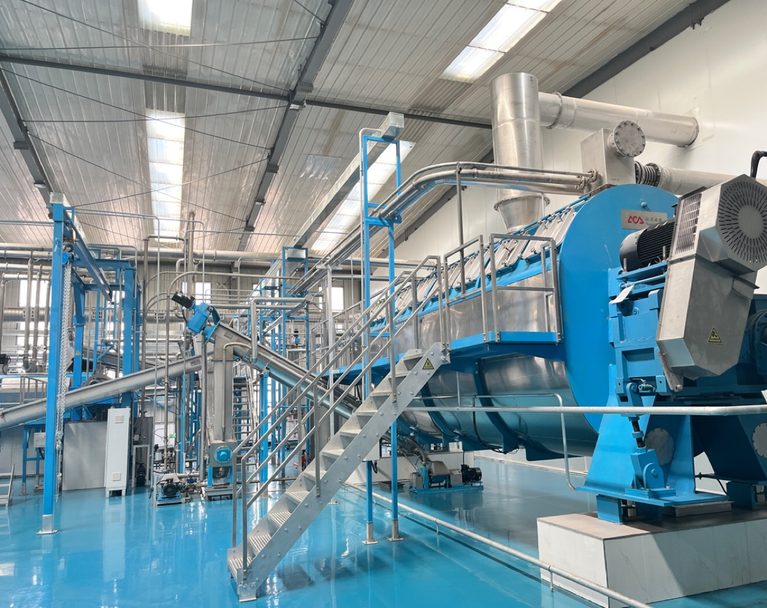
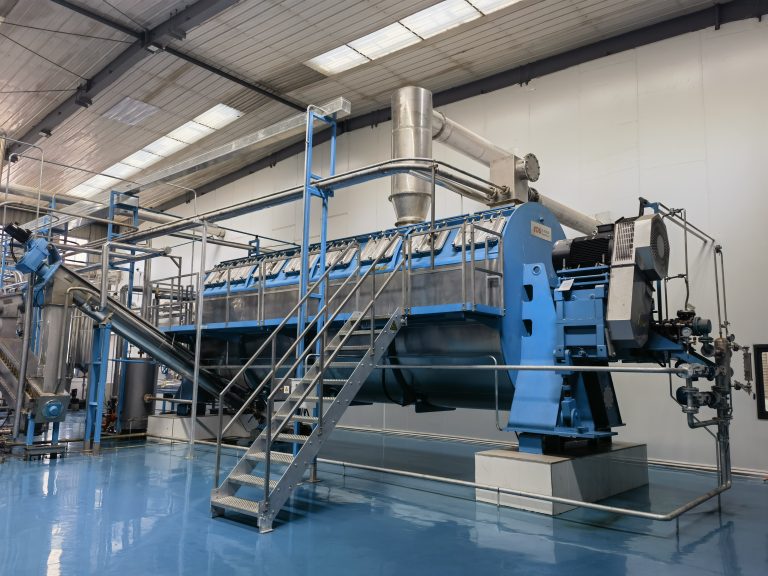
Rear section of a slaughterhouse: materials leaving the slaughter hall enter another continuously running process system
The new national standard draws a hard line: no feathers in meat and bone meal GB/T 20193-2025 Feed Raw Materials— Bone Meal and Meat and Bone Meal, effective May 1, 2026, puts the raw material requirement bluntly:meat and bone meal “shall come from a single animal species and,apart from unavoidable admixture, shall not contain hooves, horns, bristles, feathers, hides or digestive tract contents”.
The engineering implication is that a poultry slaughter project cannot be equipped with just one line. Feather consists mainly of keratin,whose protein chains are locked tight by disulfide bonds; simply drying and grinding it will never raise pepsin digestibility.The structure must first be opened by high-temperature, high-pressure hydrolysis,followed by dewatering in a screw press, then drying and milling, before it becomes feather meal.Bones, offal and inedible by-products go down another route: pre-crusher, cooking or hydrolysis,screw press for fat extraction, meal drying, and milling. Mixing three kinds of material on one line leads, at best,to downgraded products — at worst, to whole rejected batches.
Three lines, three different equipment lists
The core of the feather line is the continuous hydrolyser; the difficulty is hydrolysing “just enough, but not too much” — too little and digestibility stays low,too much and lysine is lost. It is followed by a screw press for dewatering, a disc dryer, and a milling plant for the finished meal.The meat and bone meal line has an extra pre-crusher and metal detector at the front, a batch cooker or continuous hydrolyser in the middle,then the same pressing, drying and milling — but with a different parameter window.For premium-grade meal the new national standard requires crude protein ≥50%, lysine ≥2.4%,crude fat ≤16%, pepsin digestibility ≥85% and volatile basic nitrogen ≤100 mg/100 g; all of these are determined together by cooking temperature and time,press residual fat, and drying temperature — if the drying temperature is too high, lysine is lost to the Maillard reaction and digestibility drops sharply.
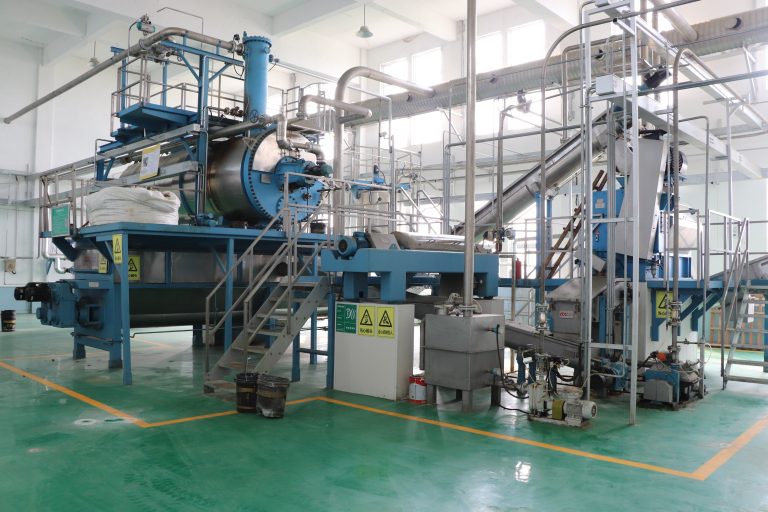
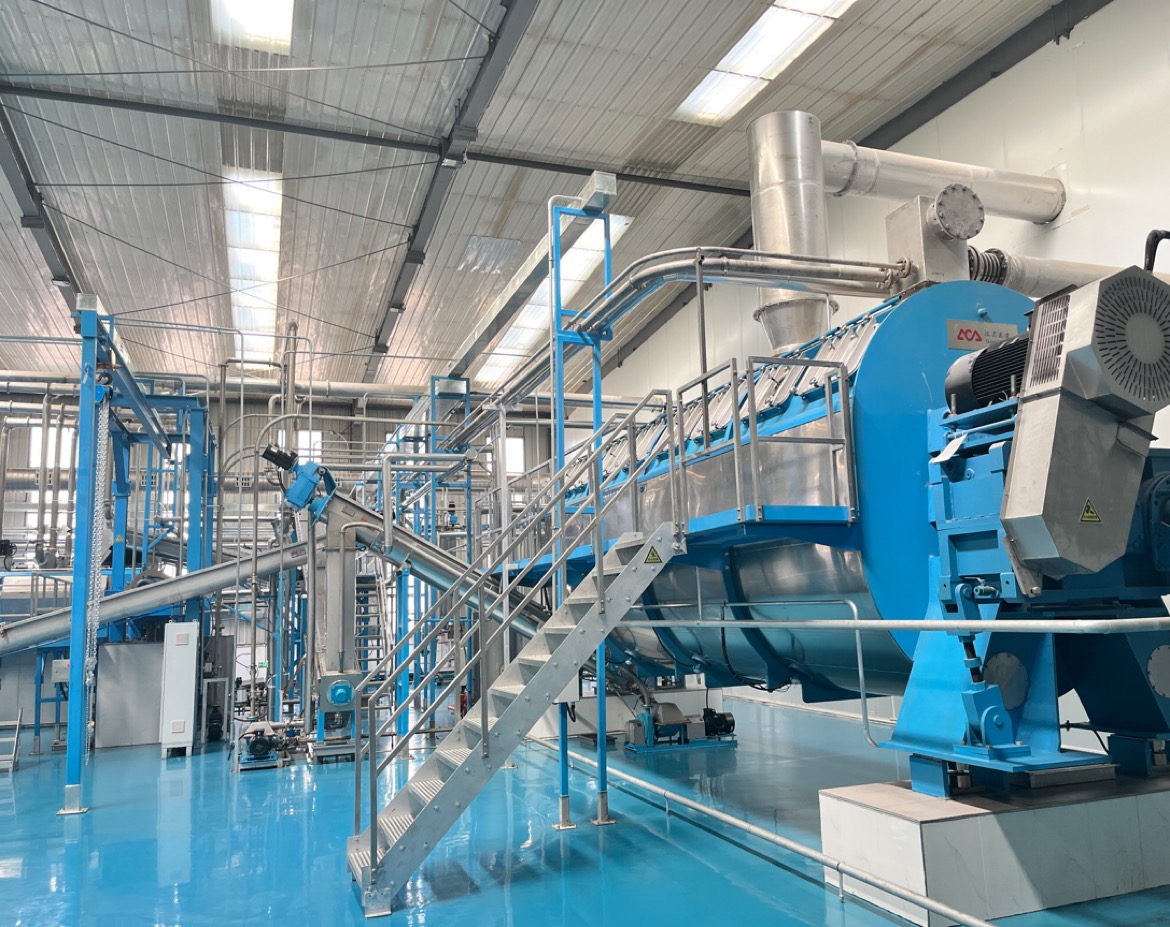
Feather line: hydrolysis, pressing, drying and milling — four process stages matched to the special structure of keratin
The fat line is shorter: melting kettle — vibrating screen or decanter centrifuge — fat buffer tank — fat pump. What really makes a “complete plant” valuable is the section shared by all three lines: the vacuum pump station,vertical condenser, air-condenser, scrubber and ionization tower, cyclon dust collector and waste gas treatment. If steam,vacuum, condensing and deodorizing are each equipped separately, both investment and operating costs double; if shared,the waste gas load must be calculated from the superimposed peaks of all three lines — a problem many projects only discover at the commissioning stage.
Don’t size capacity by headcount
How to set the capacity of the three lines is where such projects most easily go wrong.The starting point is not “how many animals per day” but “how many tonnes of by-products per day, in what form,with what moisture and fat content”. Two plants each slaughtering 1,000 pigs a day, but with live weights of 110 kg versus 130 kg,can differ by several tonnes of by-products; poultry is even more striking — feathers have low bulk density and high moisture,so counting by tonne and counting by volume give entirely different results. Add the pre-holiday peaks of concentrated market shipments,and line capacity must keep a margin, rather than being sized tightly to the annual average daily slaughter count.
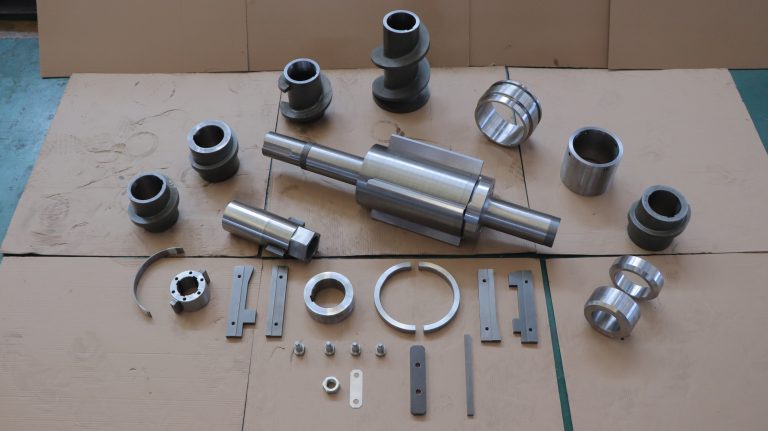
Three outputs from the same plant: feather meal, meat and bone meal and industrial fat, each with its own standard and destination
The truly difficult part of such projects begins after the slaughter hall: materials must be split into streams,processes matched and waste gas combined — any segment that fails to connect will be dug out at the audit.This is exactly the segment Chengzhu (Hebei Chengzhu Machinery Group) works on —complete rendering treatment lines for feather meal, meat and bone meal and fish meal,with the process defined from the material balance, connecting crushing, hydrolysis, pressing,drying, milling and waste gas treatment into one line that runs continuously.



 Blog · 10 月 21, 2026 In the Year of GMP Audits: Why One Slaughter Line Needs Three Rendering Lines Read More